Why Europe Cannot Integrate More Offshore Wind Without Energy Islands
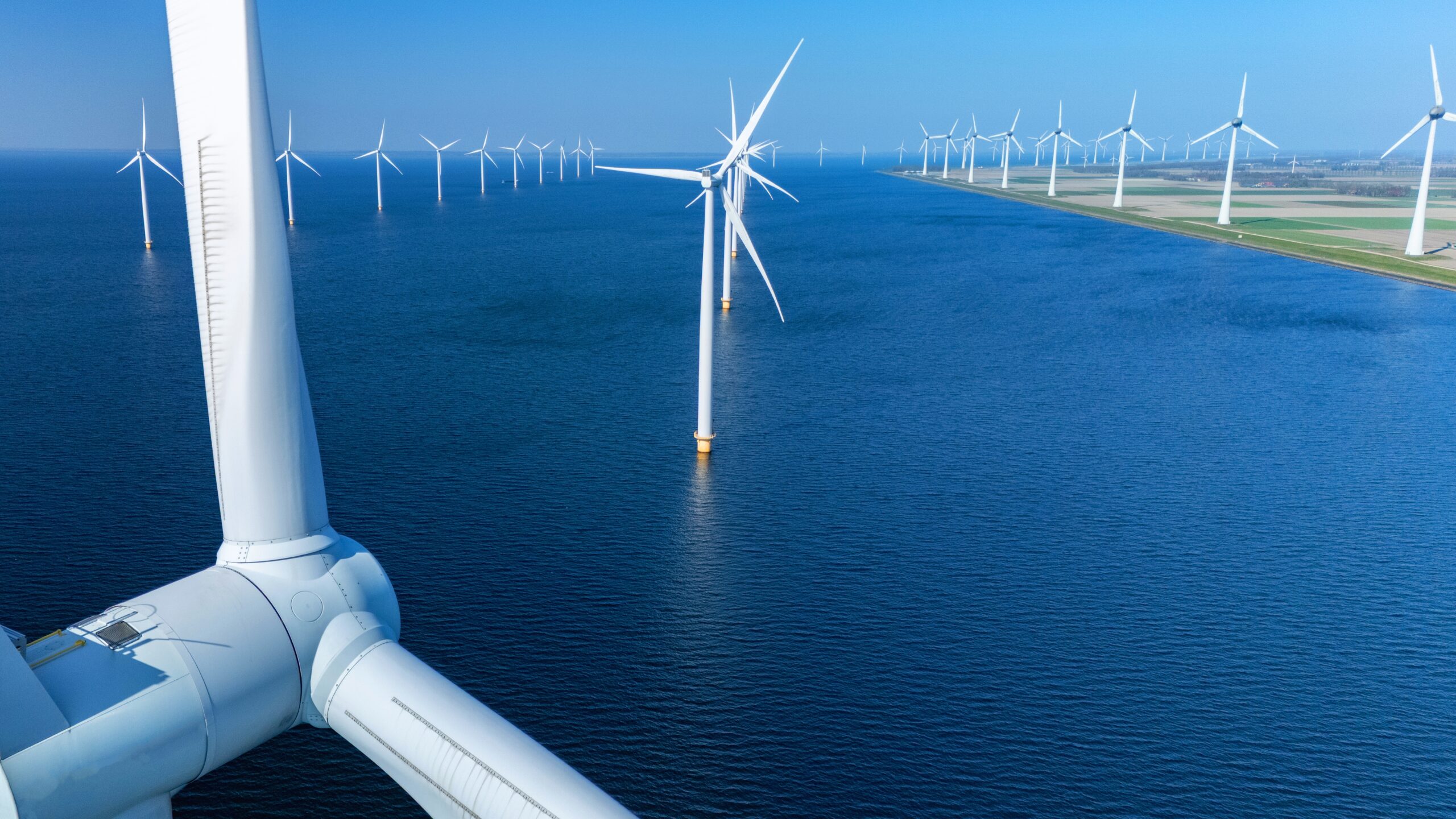
Europe has never produced more renewable energy than it does today.
The expansion of offshore wind is accelerating, new wind farms are commissioned every year, and the ambitions for 2030 and 2050 are historically high.
Yet the European energy system is facing a fundamental challenge:
While the production of green electricity continues to grow, we are seeing grid congestion, significant price differences between regions, and situations where renewable energy cannot be fully utilised.
The problem is not a lack of energy.
The problem is system integration.
And this is exactly where energy islands play a decisive role in the future energy infrastructure.
More generation does not solve a system problem
The existing European power system was fundamentally designed for a different reality.
A reality with centralised onshore generation, predictable power flows, and clearly defined national borders.
Today, an increasing share of electricity is produced offshore — far from consumption centres, dependent on weather conditions, and often in very large volumes over short periods of time. When the wind blows strongly, production can exceed what national grids are able to handle. When it does not, imbalances arise elsewhere in the system.
Building more wind turbines alone does not solve this challenge. Establishing additional HVDC connections directly to shore is also not sufficient.
Without a new way to collect, control, and distribute energy, the power system reaches a technical and operational limit.
When energy infrastructure becomes the limiting factor
A lack of coherence in the energy infrastructure leads in practice to:
- Renewable energy being curtailed or disconnected
- Large variations in electricity prices between regions
- Transmission and grid capacity becoming bottlenecks
- Security of supply being challenged during periods of imbalance
This is not a problem with offshore wind technology itself.
It is a system-level challenge that must be addressed at the infrastructure level.
This is where energy islands differ fundamentally from traditional point-to-point solutions.
Energy islands as a system buffer in the European energy system
An energy island is first and foremost not a generation facility.
It is a central system component within the energy infrastructure.
Energy islands act as a buffer between offshore wind production and onshore power grids, enabling the system to:
- Aggregate production from multiple offshore wind farms
- Control energy flows before they reach national power systems
- Distribute electricity flexibly between multiple countries
- Relieve existing transmission infrastructure
- Increase robustness and stability across the overall energy system
Instead of sending all power directly into a single market at a time, the energy island can route electricity intelligently — based on demand, available capacity, and market conditions.
This makes it possible to integrate large volumes of offshore wind without compromising operational stability.
Why more cables are not enough
It may seem intuitive to assume that the solution is simply more interconnectors between countries.
However, traditional HVDC links address only part of the challenge:
- They move energy between two markets
- They do not manage the overall system complexity
- They scale poorly when many offshore wind farms must be integrated simultaneously
Energy islands change the logic.
They consolidate complexity offshore and reduce the burden on national grids, instead of transferring it directly onshore.
It is the difference between expanding a road network — and creating a traffic hub.
Bornholm Energy Island as a concrete example
Bornholm Energy Island is the first full-scale implementation of this approach in Europe.
Here, large volumes of offshore wind power in the Baltic Sea are collected and connected to both Denmark and Germany through a single, integrated energy infrastructure.
This contributes to:
- Improved utilisation of wind resources
- Increased flexibility in energy trading
- Enhanced security of supply
- A robust foundation for future connections and expansions
Bornholm therefore serves as a reference project for how energy islands can support a more interconnected and efficient European energy system.
Energy islands are a prerequisite for the future energy system
Europe is facing extensive electrification across society. Transport, industry, and heating will increasingly rely on electricity.
This transition can only succeed if the energy system is able to:
- Handle large volumes of variable generation
- Move energy to where it is needed
- Ensure stable operation and high security of supply
In this context, energy islands are not an option — they are a prerequisite for an energy infrastructure that can operate at scale.
About Sirius Energy
Sirius Energy is a Danish consultancy specializing in energy infrastructure, high-voltage systems, offshore wind, HVDC, Commissioning and on-site management.
We work close to the projects and bring practical experience from installation, testing, commissioning and operation of some of Europe's most complex energy plants.