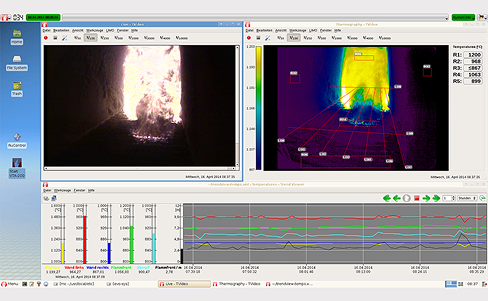
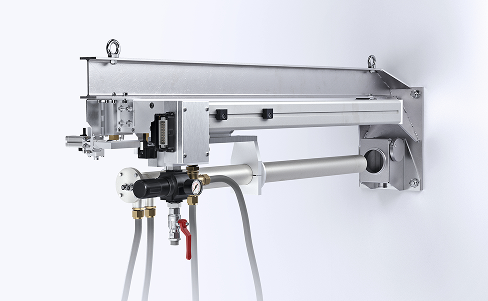
Seeing the Furnace from the Right Angle: Why 60° Elbow Furnace Cameras Matter
In furnace monitoring, visibility is not only about image quality. It is just as much about where and how the process is observed.
Many furnace cameras are installed in straight-line configurations, looking directly into the combustion chamber. In a wide range of applications, this provides sufficient insight. In others, however, critical zones remain hidden due to furnace geometry, internal structures, or installation constraints. In these cases, improving visibility is not a question of moving the camera—but of changing the viewing direction.
This is where 60° elbow furnace cameras play a decisive role.
When straight-line viewing reaches its limits
Furnaces are rarely designed with camera visibility in mind. Grates, burner arrangements, refractory shapes, and furnace walls often block direct lines of sight from standard insertion points.
As a result, important areas may remain partially or completely invisible, even though a camera is installed. Typical examples include:
- viewing along grates rather than across them
- observing slag formation close to furnace walls
- monitoring flame interaction with refractory surfaces
- accessing zones shielded by internal furnace structures
In such situations, increasing the field of view alone does not solve the problem. The direction of observation must change.
The 60° elbow concept – applying the boroscope principle industrially
A 60° elbow furnace camera applies a well-known boroscope principle,but in a fundamentally different way than portable inspection tools.
Instead of a flexible or temporary probe, the optical path is mechanically redirected inside the camera head.This creates a fixed and stable 60° viewing direction, allowing the camera to “look sideways” into areas that cannot be observed with straight insertion.
In industrial furnace applications, this concept is not about inspection convenience. It is about:
- achieving meaningful visual access to specific operational zones
- maintaining a repeatable and defined viewing direction
- enabling continuous, unattended operation under extreme conditions
The elbow configuration is therefore an intentional design choice, not a workaround.
Where a 60° viewing angle creates real value
Elbow camera configurations are particularly useful when the operational question is focused on specific areas, rather than a full furnace overview.
Typical use cases include:
- monitoring fuel bed behaviour along grates
- observing slag build-up near furnace walls
- verifying local flame behaviour close to refractory
- visual confirmation in zones hidden from straight-line view
By aligning the viewing angle with the operational need, the camera delivers usable insight, not just images.
Viewing concepts in practice – D-FS2 examples
In the D-FS2 camera family, viewing concepts are defined through configurable variants, each designed to balance field of view, level of detail, and furnace geometry.
D-FS2 – Camera viewing options
| Variant | Viewing direction | Field of view (diagonal) | Typical application |
| VIS30 | Straight (0°) | 30° | Focused monitoring of specific zones or known problem areas |
| VIS60 | Straight (0°) | 60° | Balanced view for general combustion monitoring |
| VIS90 | Straight (0°) | 90° | Wide overview of combustion chamber and flame distribution |
| VIS120 | Straight (0°) | 120° | Very wide overview for large furnaces or cross-section monitoring |
| VIS6060 | Elbowed (60°) | 60° | Angled view enabling observation of areas not visible with straight insertion, e.g. along grates or furnace walls |
The VIS6060 variant applies the same field of view as a straight 60° camera, but redirects the viewing direction to access otherwise hidden zones.
Cooling considerations: why elbow cameras are different
Redirecting the optical path has implications beyond visibility.
In a 60° elbow configuration, the viewing direction often places the optics closer to furnace walls or high-radiation surfaces. This increases the local thermal load on the camera head and optical components.
As a result, cooling selection becomes particularly important:
- Air-cooled systems may be sufficient in applications with moderate temperatures and radiant heat loads, offering simpler installation.
- Water-cooled systems are typically required in high-temperature zones, intense radiant heat environments, or installations with long insertion lengths. Water cooling provides increased thermal protection and supports stable image quality and long system lifetime.
The choice between air and water cooling is therefore directly linked to viewing angle, insertion depth, and local furnace conditions — not to camera type alone.
Designed for continuous operation, not inspection
Although elbow furnace cameras apply a boroscope principle optically, they are fundamentally different from inspection boroscopes.
Elbow furnace cameras are:
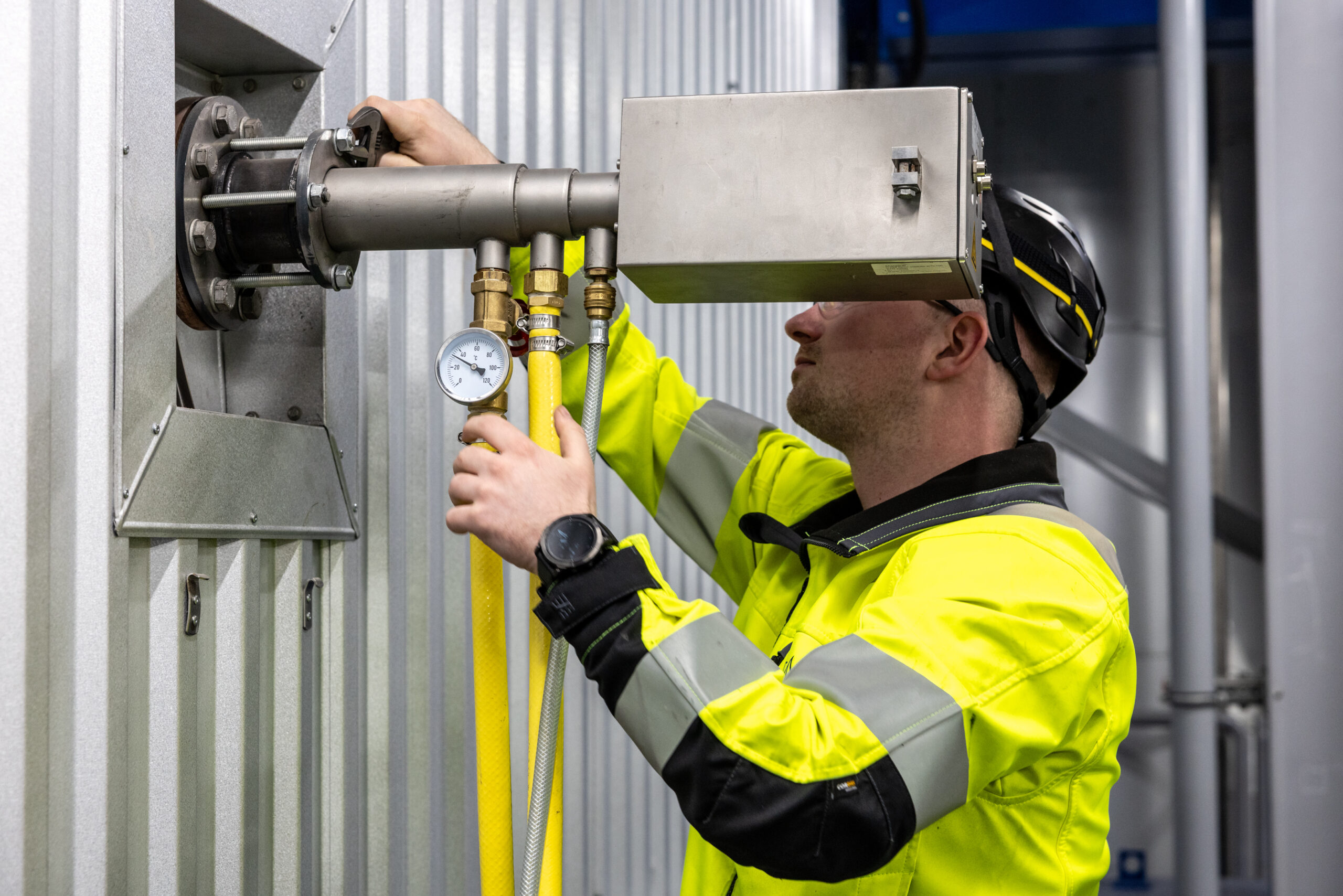
- permanently installed
- continuously cooled and purged
- mechanically protected
- integrated into plant control and monitoring systems
This makes them suitable for 24/7 operation in demanding industrial environments, where reliability and predictable behaviour are essential.
Seeing what matters most
In furnace monitoring, the question is rarely whether visual insight is needed. The real question is from which angle the process should be observed.
A 60° elbow furnace camera provides a practical and proven solution where straight-line viewing falls short. By combining angled optics with appropriate cooling and system design, operators gain reliable visual access to critical zones—supporting safer operation, faster troubleshooting, and more confident decision-making.
Getting the right view starts with the right discussion
Selecting the right furnace camera configuration is rarely a matter of choosing a standard product. Viewing angle, insertion position, cooling concept, and furnace geometry all influence whether a camera delivers meaningful and reliable insight in daily operation.
If you are considering a furnace camera installation—or evaluating whether a straight or elbow configuration is the right choice—Sirius Energy can support the process. Our team works with furnace camera systems in real plant environments and can help assess which viewing concept and system design best match your specific setup and operational needs.
A short discussion early in the process often makes the difference between simply having a camera installed and gaining visual insight that truly supports operation.