Choosing the Right Furnace Camera: Matching Technology to Real Furnace Conditions

When plants consider installing furnace cameras, the first question is often which camera model to choose. In practice, the more important question is how the camera will be used and under what conditions it must operate.
Furnace cameras are not generic inspection tools. They are permanent process instruments designed to operate continuously in environments where temperature, radiation, dust load, and mechanical stress vary significantly from one location to another. Selecting the right solution therefore requires a clear understanding of both the furnace conditions and the operational role the camera is expected to support.
Furnace environments are fundamentally different
Conditions inside a furnace are not uniform. Even within the same boiler or incinerator, operating conditions can vary widely depending on location.
Conditions at the grate differ significantly from those in the combustion zone or along the boiler walls and ceiling. A camera that works stably in one place will not necessarily work in another.
Temperature levels, radiant heat load, dust concentration, gas composition, and accessibility differ between zones such as:
- the main combustion space
- the fuel bed or grate area
- burner zones
- furnace walls and roof areas
A camera installed in a relatively moderate zone may require a very different design than one exposed to extreme radiant heat or long insertion depths. Assuming that one camera concept can cover all applications increases the risk of reduced image quality, higher maintenance requirements, or limited system lifetime.
Visual monitoring applications – typically served by the D-FS 50 range
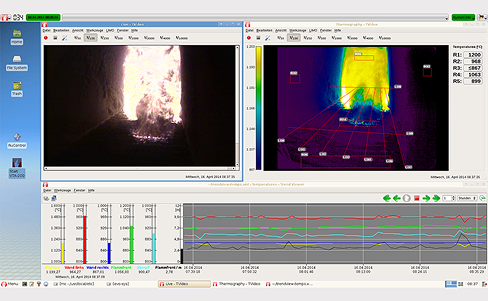
In many installations, the primary purpose of a furnace camera is reliable visual monitoring.
Typical use cases include:
- observing flame behaviour and flame stability
- monitoring fuel distribution and grate performance
- detecting developing slagging or ash build-up
- supporting daily operational decisions and troubleshooting
For these applications, a furnace camera designed for visual monitoring under demanding—but not extreme—conditions is often the most appropriate choice. Within the DURAG portfolio, this role is typically covered by the D-FS 50 range, offering robust, standardised viewing concepts for general combustion monitoring.
Selecting a more complex heavy-duty solution in these cases does not necessarily improve operational insight. Instead, it may increase cost and system complexity without delivering additional value.
Heavy-duty applications under extreme conditions – typically served by D-FS2
Other furnace zones place far greater demands on any installed equipment.
Very high temperatures, intense and fluctuating radiant heat, aggressive flue gases, and heavy dust loads require furnace cameras specifically engineered for continuous operation under extreme conditions. In these environments, robustness is not optional — it is essential.
Heavy-duty furnace camera systems are typically required when:
- temperatures and radiant heat loads are consistently high
- long insertion lengths expose equipment to severe thermal stress
- camera images are used for process assessment rather than observation alone
- long-term stability and predictable performance are critical
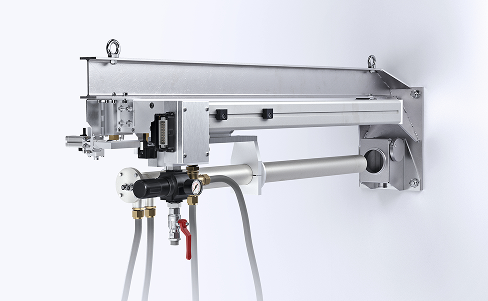
In these cases, selecting proven technology designed for such environments is not overengineering. It is a prerequisite for reliable operation. This is where heavy-duty systems such as DURAG’s D-FS2 range are typically applied, offering flexible viewing concepts and robust protection for the most demanding furnace zones.
System design matters as much as the camera unit
Reliable furnace monitoring is not achieved by the camera unit alone. The surrounding system design is equally important.
Cooling concept, purge air, mechanical protection, insertion depth, and viewing angle all influence image quality, system lifetime, and operational reliability. Air-cooled and water-cooled configurations serve different purposes and must be selected based on actual furnace temperature and heat load.
- image quality
- reliability
- maintenance needs
- the lifetime of the system
Likewise, viewing concepts must be defined during system design. Field of view, viewing direction, and camera positioning determine whether the image provides meaningful operational insight or simply visual information without practical value.
A furnace camera system must therefore be engineered as a complete solution, not assembled from isolated components.
Avoiding common selection mistakes
Many furnace camera issues originate not from the technology itself, but from mismatched expectations or incorrect application.
Common pitfallsinclude:
- underestimating local furnace conditions
- selecting camera specifications without considering installation location
- using standard solutions in zones requiring heavy-duty protection
- focusing on camera units rather than total system configuration
Avoiding these mistakes requires experience with real furnace operation and a structured approach to system design.
Proven technology and application experience
In demanding furnace environments, technology quality and long-term reliability matter. Furnace camera systems must operate predictably over years of continuous exposure to extreme conditions.
This is why proven industrial technology plays a decisive role. DURAG furnace camera systems are designed specifically for continuous combustion monitoring in biomass, waste-to-energy, and industrial furnaces. Their design philosophy focuses on mechanical robustness, stable image performance, and predictable operation under high thermal and mechanical loads.
Equally important is application experience — understanding how furnace cameras are actually used in daily operation, commissioning, and troubleshooting.
How Sirius Energy supports furnace camera projects
Sirius Energy supports furnace camera projects by combining proven DURAG technology with practical operational experience.
As an authorised DURAG dealer, Sirius Energy assists plants with:
- assessing furnace conditions and installation locations
- defining operational requirements
- selecting appropriate camera systems and cooling concepts
- system integration, commissioning, and operational support
Our focus is always on matching technology to real operating conditions, ensuring that furnace camera systems deliver stable images, long service life, and practical value in daily operation.
Choosing the right furnace camera is not about selecting the most advanced product on paper. It is about selecting the right system for the right application — and ensuring it is implemented correctly from the start.