Logo
  • Energy
  • Facility
  • Infrastructure
  • Innovation
  • Products
    • Furnace Camera DFS 2
    • Furnace Camera DFS 50
  • Blog
  • Contact Us
Menu
  • Energy
  • Facility
  • Infrastructure
  • Innovation
  • Products
    • Furnace Camera DFS 2
    • Furnace Camera DFS 50
  • Blog
  • Contact Us

Furnace Cameras: Turning Visibility into Safer, More Efficient Plant Operations
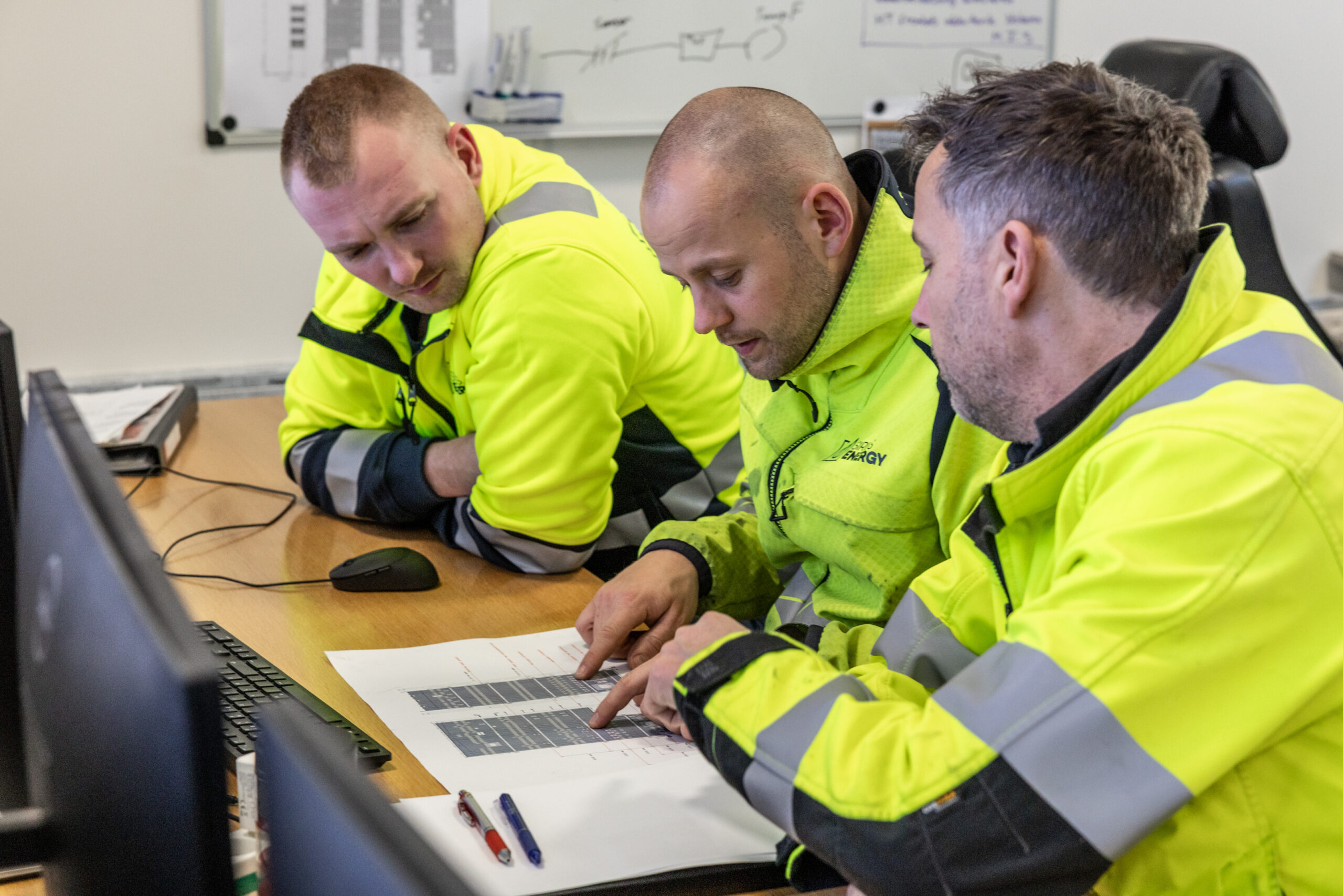
Where others guess, you see.

In biomass, waste-to-energy, and industrial combustion plants, operators are expected to maintain stable operation, high efficiency, and safe working conditions—often under increasingly challenging circumstances. Fuel quality varies, load changes are frequent, and environmental requirements continue to tighten.

In this context, furnace cameras have become an increasingly important tool for understanding what is actually happening inside the furnace—where the combustion process determines both performance and risk.

Yet one fundamental challenge remains common across many plants: limited direct visibility into the furnace itself.

The limits of indirect measurements

Modern plants rely heavily on indirect measurements such as temperatures, pressures, oxygen levels, and emissions data. These signals are essential for control and compliance, but they do not always tell the full story.

Slagging, fouling, unstable flame behaviour, or uneven fuel distribution can develop inside the furnace long before they are clearly reflected in control system values. By the time deviations appear as alarms or trends, the underlying issue may already have escalated—leading to reduced efficiency, increased wear, or unplanned shutdowns.

In practice, this means operators are often forced to interpret symptoms rather than observe causes.

Why limited visibility increases operational complexity

When direct visual insight into the combustion process is missing, operational decisions must be made based on assumptions and indirect indicators.

This increasescomplexity and uncertainty in daily operation:

  • Slagging or ash build-up may progress unnoticed until airflow or heat transfer is affected
  • Flame instability can persist longer than necessary, impacting efficiency and emissions
  • Manual inspections may be required in hazardous or high-temperature areas
  • Troubleshooting becomes slower, more disruptive, and less precise

In plants firing biomass or waste-derived fuels, these challenges are often amplified. Fuel properties change frequently, combustion behaviour can shift rapidly, and indirect measurements alone may not provide early or unambiguous feedback.

How furnace cameras change operational insight

By providing continuous visual access directly inside the furnace, furnace cameras fundamentally change how combustion processes are monitored and understood.

Operators can observe flame behaviour, fuel distribution, slagging tendencies, and ash build-up as they develop—rather than inferring them after the fact. This makes it possible to detect deviations earlier and respond before they escalate into operational or safety issues.

Instead of asking “Why did this happen?”, the focus shifts to “What is happening right now?”..

This shift from reactive to proactive operation is one of the key reasons furnace cameras have become a standard tool in many modern plants.

From visual observation to better operational decisions

Visual insight does not replace process data—it strengthens it.

When furnace camera images are combined with existing measurements, operators gain a more complete and reliable understanding of furnace conditions. This makes it easier to:

  • Validate control system signals against real combustion behaviour
  • Distinguish between sensor-related issues and actual process changes
  • Adjust fuel distribution or grate operation with greater confidence
  • Reduce trial-and-error during commissioning or troubleshooting

Over time, this leads to more stable operation, improved efficiency, and fewer unplanned interventions.

Safety and automation benefits

In addition to performance improvements, furnace cameras play an important role in plant safety.

Continuous monitoring reduces the need for manual inspections in hazardous areas and enables early detection of abnormal conditions such as flame impingement, unexpected build-up, or local hot spots. This supports safer working conditions for plant personnel.

As plants move towards higher levels of automation and remote supervision, visual confirmation of furnace conditions becomes even more important. Furnace cameras provide an additional layer of assurance in operating environments where personnel are not continuously present.

A standard tool in modern combustion plants

Today, furnace cameras are no longer niche instruments reserved for exceptional cases. Across biomass, waste-to-energy, and industrial combustion plants, they are increasingly used as standard operational tools—supporting daily decision-making, improving situational awareness, and strengthening the link between process data and physical reality.

For operators, engineers, and plant managers alike, the benefit is clear:
What can be seen can be understood—and what is understood can be controlled.

In operating environments where margins are tight and downtime is costly, furnace cameras are not just a technical addition. They are a practical enabler of safer, more efficient, and more predictable plant operation.

How Sirius Energy Supports Furnace Camera Solutions

Sirius Energy supports industrial plants with the design, supply, and integration of furnace camera solutions for biomass, waste-to-energy, and energy-intensive industries.

Our services cover the full lifecycle—from application assessment and system selection to installation, commissioning, and operational support. With a strong focus on real operating conditions and close collaboration with plant personnel, we help ensure that furnace cameras deliver practical value in daily operation—not just technical capability.

Sirius Energy is an authorised dealer of DURAG furnace cameras, a proven technology widely used worldwide for continuous combustion monitoring in harsh industrial environments. Combined with our hands-on approach to integration and commissioning, this allows us to deliver reliable solutions that work in practice.

If you want to explore how furnace cameras can support your specific plant or process, Sirius Energy can help evaluate the right solution and implementation approach.
GET IN TOUCH


    Logo
    • hello@siriusenergy.dk
    • +45 88 61 84 88
    • Sirius Energy P/S, Bakkegårdsvej 401, 3050 Humlebæk, Denmark
    • CVR: 39268477

    Sirius Energy is a technical consultancy company delivering hands-on commissioning, technical consulting and project execution services across Energy, Facility, Infrastructure and Innovation projects. Our experienced MASKINMESTRE support complex technical installations, critical infrastructure and advanced energy systems worldwide.

    ENVIRONMENTAL MENTALITY

    COPYRIGHT SIRIUS ENERGY

    Cookie Policy

    Manage Consent
    To provide the best experiences, we use technologies like cookies to store and/or access device information. Consenting to these technologies will allow us to process data such as browsing behavior or unique IDs on this site. Not consenting or withdrawing consent may adversely affect certain features and functions.
    Functional Always active
    The technical storage or access is strictly necessary for the legitimate purpose of enabling the use of a specific service explicitly requested by the subscriber or user, or for the sole purpose of carrying out the transmission of a communication over an electronic communications network.
    Preferences
    The technical storage or access is necessary for the legitimate purpose of storing preferences that are not requested by the subscriber or user.
    Statistics
    Technical storage or access used exclusively for statistical purposes. Technical storage or access that is used exclusively for anonymous statistical purposes. Without a subpoena, voluntary compliance on the part of your Internet Service Provider, or additional records from a third party, information stored or retrieved for this purpose alone cannot usually be used to identify you.
    Marketing
    Technical storage or access is necessary to create user profiles for sending advertisements, or to track a user on a website or across multiple websites for similar marketing purposes.
    Manage options Manage services Manage {vendor_count} vendors Read more about these purposes
    View preferences
    {title} {title} {title}

    D-VTA 200 - Furnace Camera Software

    Visual insight where operational decisions are made

    Product image

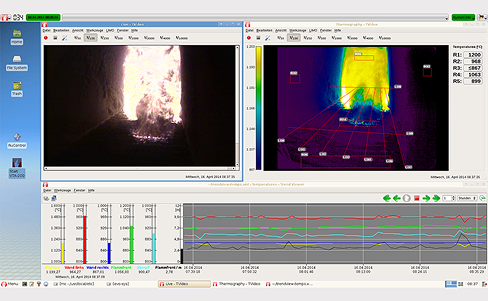
    In modern incineration plants, operational decisions are rarely based on a single data source. Temperature measurements, pressure conditions, and emission data are increasingly supplemented by direct visual insight from the combustion chamber. To create real value, visual information must be available where decisions are made – and presented in a form that supports daily operations.
    The D-VTA 200 provides structured access to both live and archived camera images and integrates visual monitoring into the existing operating environment. Operators can follow the actual combustion conditions as a natural part of their workflow.

    More than a viewer

    D-VTA 200 is not just an image viewer, but an operational tool. The software ensures stable image handling, user-controlled viewing, and authorized access – locally or via remote access, depending on the system's setup.
    Integration with the four-camera system ensures that visual information remains reliable, traceable, and clearly linked to the current operating status of the facility.

    The result: Improved overview of process conditions, reduced need for assumptions and documented visual insights that support operations, troubleshooting and commissioning.

    Enquire Now

    D-VTA 200 - Furnace Camera Software

    Visual insight where operational decisions are made

    Product image

    In modern furnace operation, decisions are rarely based on a single data source. Operators rely on temperature measurements, pressure trends, and emissions data-and increasingly on direct visual confirmation from inside the furnace. For visual insight to create real value, it must be available where decisions are made and presented in a way that supports daily operation.The furnace camera software provides structured access to live and recorded camera images, allowing operators to observe actual combustion conditions as part of their normal workflow. By presenting visual information alongside existing process data, the software helps reduce uncertainty and supports faster, more confident decision-making during both stable operation and changing process conditions. More than a viewing interface, the software is designed as an operational tool. It enables stable image handling, user-controlled viewing, and authorized access locally or remotely, depending on plant requirements. Integration with the furnace camera system ensures that visual information remains reliable, traceable, and clearly linked to the actual operating state of the furnace.

    The result:  improved situational awareness, reduced reliance on assumptions, and visual insight that strengthens daily operation, troubleshooting, and commissioning.

    Enquire Now

    D-RU Retracting Unit

    Controlled protection for furnace camera systems

    Product image

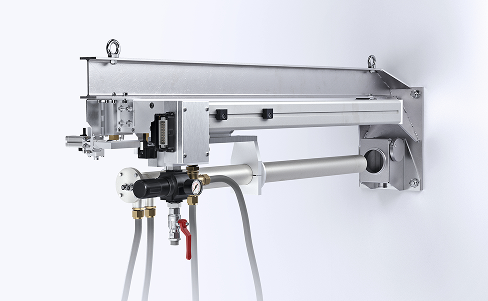
    In furnace environments, operating conditions can change rapidly. Sudden increases in temperature, loss of cooling or purge air, or abnormal process events can expose permanently installed equipment to conditions it is not designed to withstand continuously. For furnace camera systems, this creates a clear need for active protection-not only to prevent damage, but to ensure long-term reliability.

    The D-RU retracting unit addresses this challenge by providing controlled withdrawal of the furnace camera whenever defined operating limits are exceeded. By physically removing the camera from direct furnace exposure, the D-RU protects the optical system and mechanical components from excessive thermal load, dust, and aggressive process conditions. Retraction can be triggered automatically via the system control unit or initiated manually, depending on plant requirements and system configuration. More than a mechanical safeguard, the D-RU is an integrated part of the furnace camera system. It works in coordination with cooling, purging, and control functions to ensure predictable behavior under both normal and abnormal operating conditions. This integrated approach reduces the risk of equipment damage, limits unplanned maintenance, and supports stable operation over the system's lifetime.

    The result: improved system availability, extended equipment lifetime, and reliable protection of furnace camera systems in demanding industrial applications.

    Enquire Now


    D-RU Pull-out unit for boiler room camera protection

    Controlled protection in changing operating conditions

    Product image

    In incineration plants, operating conditions can change rapidly. Sudden temperature increases, failures of cooling or cleaning air systems, or unforeseen process events can expose permanently installed equipment to loads it is not designed to withstand continuously. For boiler room cameras, this means active protection is crucial – both to avoid damage and to ensure stable operation over time.

    Automatic and controlled extraction

    D-RU is designed to pull the boiler room camera out of the combustion chamber in a controlled manner if predefined operating limits are exceeded. By physically removing the camera from direct impact, thermal stress and exposure to dust and aggressive process conditions are reduced.
    Extraction can be activated automatically via the system controller or manually as needed, depending on the system configuration and operating strategy.

    Integrated part of the overall camera system

    D-RU is not just a mechanical safety feature, but an integral part of the overall boiler room camera system. The unit works together with cooling and purge air systems as well as control and monitoring to ensure predictable operation under both normal and abnormal operating conditions.

    The integrated approach reduces the risk of equipment damage, limits unplanned maintenance and contributes to high system availability.

    The result: Increased reliability, longer equipment lifetime and reliable boiler room camera protection in demanding industrial applications.

    Enquire Now

    D-FS2 Enquiry

    Contact Us: hello@siriusenergy.dk


    WHAT IS AN ENGINEER?

    A TECHNICAL LEADERSHIP PROGRAM WITH ENERGY AT ITS CORE


    Chief engineer is a protected and recognized title in Denmark, covering a technical leader with Broad professional knowledge and responsibility for complex technical systems. The program is a Bachelor's degree in Technical management, mechanical engineering and energyand the official title is Bachelor of Technology Management and Marine Engineering (BTechMan & MarEng).

    The engineer profession has maritime roots and originates from the role of chief engineer on board ships. Today, engineers work in both maritime and land-based sectors and play a key role in Energy, utilities, manufacturing, infrastructure and construction industrieswhere reliability and efficiency are crucial.

    Unlike the term "engineer", which is not protected in Denmark, you can only call yourself a master engineer if you have completed the approved education accredited by the Ministry of Higher Education and Science.

    A broad and practical energy engineering education

    Typically lasting 3.5-4.5 years, the Master Machinist program combines theory with hands-on experience. It prepares graduates to Manage, operate, optimize and maintain technical installations - with a special focus on energy consumption, supply and sustainability.

    Key subject areas include:

    - Power and energy systems Power supply and installations
    - Engines, boilers and HVAC systems
    - Automation and process control
    - Energy optimization and sustainable solutions
    - Operations management and maintenance
    - Regulatory requirements and documentation
    - Industry internships and real-life experience

    Several educational institutions use the term Operation and Maintenance Engineer (OME) internationally to reflect the breadth of training - both at sea and on land.

    An important role across industries

    The machine master combines Technical depth with management skills. Many work as key people in energy sectorwhere they are responsible for facilities, operations, uptime and efficiency - as well as managing crews and coordinating with external stakeholders.
    Employment among master machinists is widely distributed according to 2025 figures:

    - 37% works with consulting and sales
    - 35% is in manufacturing and industrial companies
    - 12% works in the maritime sector
    - 11% is in energy, water or waste supply
    - 5% is in construction and technical operation

    This variation emphasizes why the chief engineer is often referred to as
    Denmark's most versatile technical leadership program with energy in focus.


    What is a Danish "Maskinmester"?

    A uniquely broad technical and managerial profession


    The Danish title Maskinmester - sometimes translated as Marine Engineer or Operation and Maintenance Engineer (OME) - is a protected and respected professional designation in Denmark. It refers to a highly versatile engineer educated through a professionally-oriented bachelor's program in Technology Management and Marine Engineering. The degree's international title is Bachelor of Technology and Marine Engineering (BTechMan & MarEng).

    The Maskinmester profession has deep maritime roots, originally referring to the chief engineer responsible for the safe operation of all technical systems on a ship. Over time, the profession has grown to encompass a far broader field of work - both offshore and onshore - and today, Maskinmestre play key roles across industries such as energy, production, infrastructure, utilities, construction, and maritime transport.

    Unlike the title engineer, which is not protected in Denmark and may be used by individuals with a variety of educational backgrounds, Maskinmester can only be used by those who have completed the formal program accredited by the Danish Ministry of Higher Education and Science.
    A Broad and Practical Education
    The Maskinmester program typically lasts 3.5 to 4.5 years and integrates theory with practical experience. It prepares graduates for leadership in the operation, maintenance, optimization, and safety of complex technical systems - whether on ships or in land-based facilities.

    Key areas of the education include:

    - Electrical and electronic systems
    - Power supply and electrical installations
    - Combustion engines, power plants, and HVAC systems
    - Process automation and instrumentation
    - Maintenance and reliability engineering
    - Project and operations management
    - Leadership and environmental compliance
    - Internships and real-world industry experience

    In some institutions, the English title Operation and Maintenance Engineer (OME) is used to reflect the broad scope of responsibilities in both maritime and land-based industries.

    Employment Across Sectors
    The strength of the Maskinmester lies in the combination of technical depth and leadership capability. Graduates are often responsible for ensuring the performance, reliability, and sustainability of vital technical systems - while managing teams and coordinating across disciplines. According to national (Danish) data of 2025, employment is broadly distributed:

    - 37% work in sales and consultancy
    - 35% are employed by manufacturing companies
    - 12% work in the maritime sector
    - 11% are employed in energy, water, or sanitation
    - 5% work in construction and building services

    This diversity underscores why the Maskinmester degree is often referred to as "Denmark's broadest technical management education."

    Data Center Infrastructure Design

    High-performance electrical engineering for critical uptime.


    Sirius Energy delivers specialized electrical infrastructure solutions for data centers - designed to meet the highest standards of reliability, energy efficiency, and system integration.


    Our Infrastructure Engineering team works with data center operators, developers, and general contractors to plan, design, and document technical systems that support continuous 24/7 operations. We focus on the most critical layer of data center performance: robust, redundant power distribution and grid interface.


    We support some of Europe's leading colocation and data center service providers in developing high-availability electrical infrastructure across multiple campus locations. With experience from both hyperscale and edge environments, our engineers design systems that are scalable, resilient, and aligned with long-term operational goals.


    Our services span the full project lifecycle - from early feasibility and electrical load calculations to detailed design, utility coordination, and construction support. We work with high-, medium-, and low-voltage power systems, and design with redundancy top-of-mind, including N+1 and N+2 configurations. Our teams ensure that backup power, UPS systems, SCADA interfaces, and BMS platforms are all considered and integrated early in the process.


    In addition to layout and cable routing design, we assist with grid compliance documentation, selectivity and protection studies, and the development of PUE (Power Usage Effectiveness) optimization strategies. When required, we partner with specialists to incorporate CFD simulations that support effective airflow management and thermal control in high-density data halls.


    Our approach is hands-on, detail-oriented, and grounded in experience. We're not just designing power systems - we're building the backbone of digital infrastructure. Whether supporting a retrofit, a greenfield site, or a multi- phase buildout, Sirius Energy provides the electrical clarity needed to deliver future-ready data centers across Europe.


    PRACTICAL EXPERTISE

    - FROM LOAD CALCULATIONS TO SYSTEM OPERATION


    Our team works with data center operators and building owners to ensure electrical systems are designed, tested and documented to support continuous 24/7 operations.


    Our Infrastructure Engineering team works with data center operators, developers, and general contractors to plan, design, and document technical systems that support continuous 24/7 operations. We focus on the most critical layer of data center performance: robust, redundant power distribution and grid interface.

    Commissioning and QA/QC - our core competence

    Sirius Energy has strong competencies within Commissioning and quality assurance of data center facilities. We ensure that all installations function as planned and that documentation and handover comply with applicable requirements and standards.
    We offer:
    -Planning and execution of commissioning processes
    -FAT and SAT coordination
    - Functional testing and verification
    - Troubleshooting, technical support and ongoing dialog with suppliers
    - QA/QC, documentation and compliance checks

    Interdisciplinary understanding - with the engineer's overview
    Our consultants are trained engineers with their hands in technology and eyes on operations. They are at home in the interplay between electrical, mechanical and building automation - ensuring that technical decisions take into account both system design and actual operational behavior.
    We work closely with clients and operators, and when required, we collaborate with specialists on e.g. CFD simulations and airflow optimization in high-density server rooms.

    Future-proof data center infrastructure - ready to go

    At Sirius Energy, data center design is not just about components - it's about creating the technical backbone for digital operations. Our approach is hands-on, structured and based on experience from some of Europe's most demanding projects.
    Whether you work with colocation, hyperscale or edge, we deliver the electrical engineering clarity needed to realize high-availability, low-risk data centers.

    INDUSTRIES

    We form a part of your journey from start to finish, or slot in as you need us. Our clients are usually Danish companies with green energy projects around the world, and we complement them with the necessary competence and manpower needed.


    We are part of your journey from start to finish, or we take our place as needed. Our customers are typically Danish companies with green energy projects around the world, and we complement them with the necessary competence and manpower.

    English
    Dansk